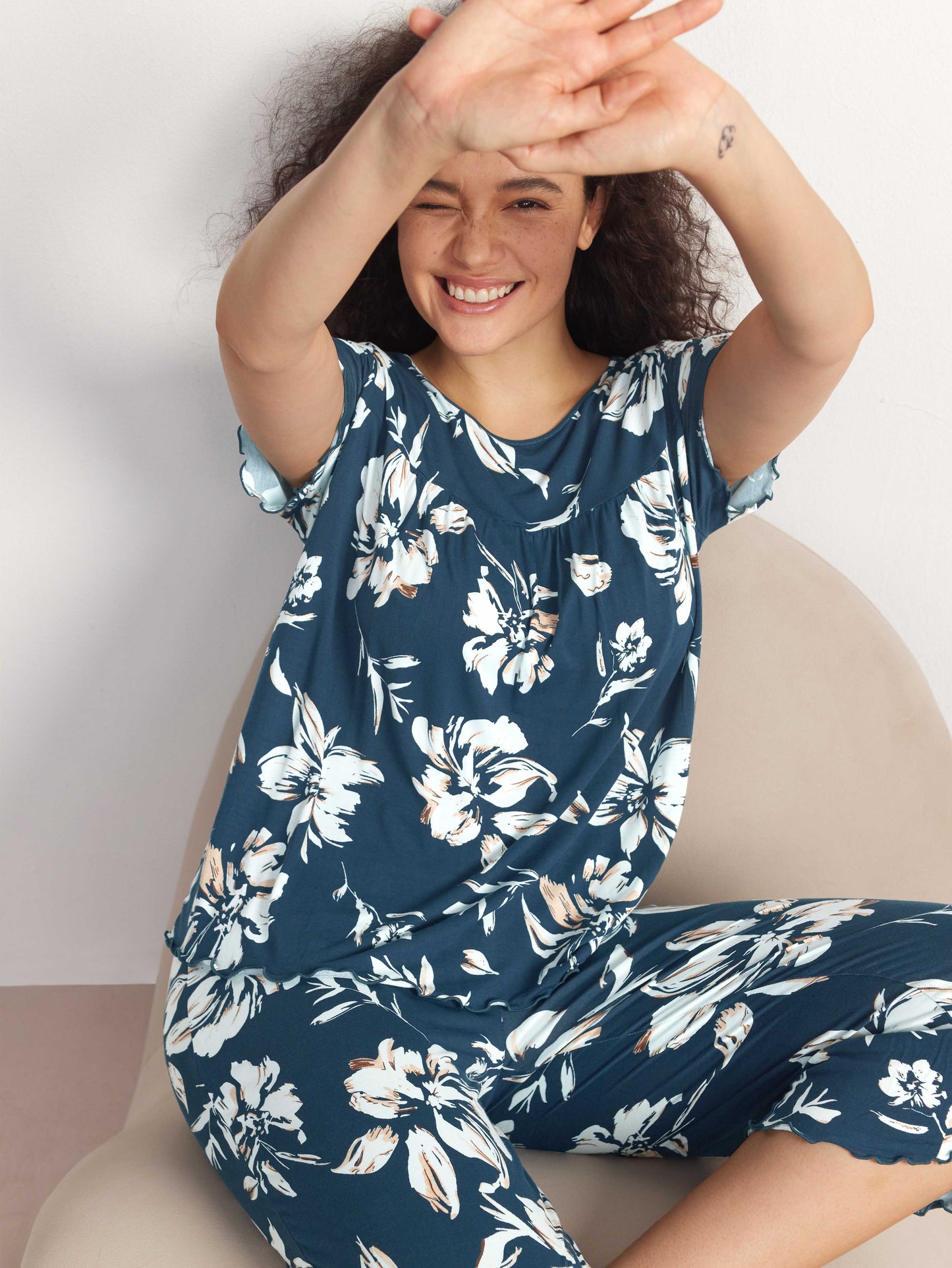
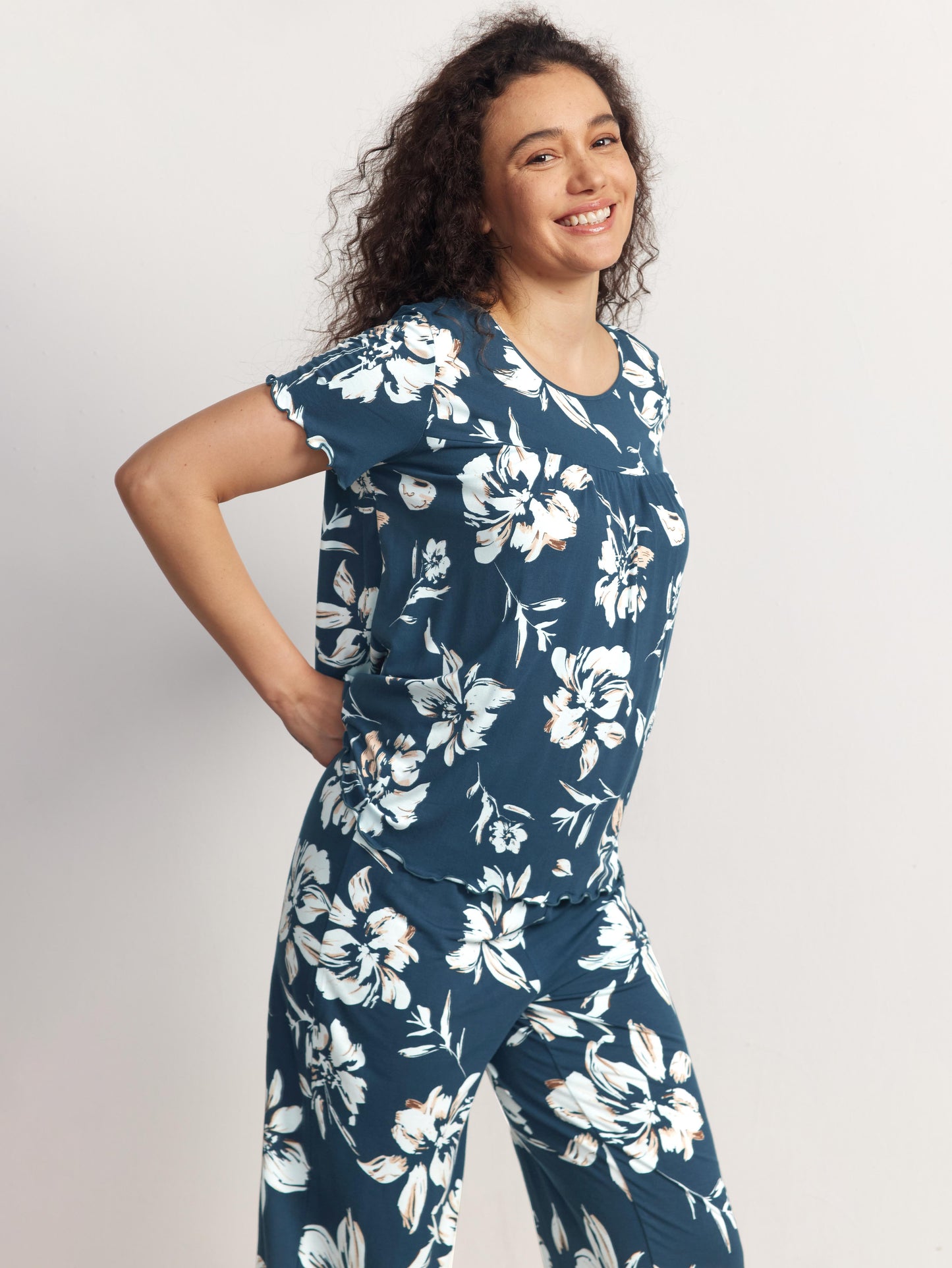
The Premium Collection Has Arrived. More Soft, More Breathable!

Machine Washable Bamboo Pajamas: Will Bamboo Knit Pajamas Shrink or Lose Shape After Washing?
If you've ever had a disappointing experience with beloved pajamas after a few washes, you're not imagining it. When people hesitate to buy bamboo pajamas, it’s often not about the price. It’s about fear: “Will it shrink?” “Will the sleeves get shorter?” “Will the fabric lose its shape?” “Will my bamboo pajama pants turn into ankle pants?”
Those questions are especially common in bamboo sleepwear discussions because bamboo fabrics are typically softer, more fluid, and more delicate-feeling than stiffer cotton weaves. The good news: shrinkage and distortion are not inevitable. In most cases, they’re a predictable outcome of specific washing variables—and you can control them.
This article explains what actually causes shrinkage and shape change, how to test it in a simple, honest way, and how to keep a bamboo pajama set fitting the way it should.
First, define the real worry: shrinkage vs distortion
When customers say “shrink,” they may mean three different outcomes:
1) True shrinkage
The garment becomes smaller overall after washing/drying.
2) Length change
Sleeves/pants shorten more than the width changes—often what tall shoppers notice first.
3) Distortion
The garment twists, the seams spiral, the drape changes, or the waistband feels different—even if the measurements don’t change much.
Compared to simple shrinkage or shortening, 'distortion' is often the more significant issue for comfort because it alters how the pajamas dynamically fit and feel on your body.
Why bamboo knit pajamas can change after washing
Most bamboo sleepwear on the market is knit-based, not a rigid woven structure. Knit fabrics are comfortable because they stretch—but that same structure can react strongly to heat, agitation, and drying tension.
The biggest drivers of shape change are:
-
Heat (hot water, high dryer settings)
-
Over-agitation (rough cycles with heavy items)
-
Improper drying (over-drying, high heat, or hanging heavy wet knits that pull downward)
If you want your bamboo knit pajamas to stay consistent, think “low heat, low agitation, low tension.”
A simple “wash-test” you can publish (and customers trust)
If your blog direction is “answer with real testing,” you don’t need a lab. You need a repeatable method that customers can understand.
Here’s a practical framework you can describe transparently:
Step 1: Measure key points before washing
Use a tape measure and record:
-
Top: chest width, sleeve length, body length
-
Bottoms: waist relaxed, hip width, inseam/outseam length (especially relevant for bamboo pajama pants)
Step 2: Wash under a defined condition
Example: cold wash, gentle cycle, similar-weight garments.
Step 3: Dry under a defined condition
Prefer air-dry flat (best control). If tumble drying, use low heat and remove promptly.
Step 4: Re-measure after 1 wash, 3 washes, 5 washes
Because many garments change most in the first few cycles.
The credibility is in the consistency: you’re not claiming perfection—you’re showing what happens under normal conditions.
“Machine washable” doesn’t mean “no precautions are necessary.”
A lot of brands say machine-washable bamboo pajamas—and customers interpret that as permission to wash like towels. That’s where disappointment comes from.
A more accurate promise is: machine washable when washed with care, parameters that match the fiber and knit structure.
At GYS, one of the product design priorities is stability: the fabric is selected to resist losing shape, and the construction focuses on durability so the garment remains wearable and presentable over time. That includes practical performance benefits people actually care about: staying soft, holding shape, and remaining comfortable “wash after wash.”
The best wash routine for bamboo pajamas (to protect fit)
If your goal is fit stability, here’s the routine that usually performs best:
Cold water + gentle cycle
Cold water protects the knit structure and reduces fiber stress.
Wash inside-out
Reduces surface friction and helps keep the hand-feel smooth—important if you’re buying a buttery soft bamboo pajama set for sensory comfort.
Avoid heavy loads
Don’t wash bamboo pajamas with jeans, towels, or items with rough hardware. Weight and abrasion increase distortion.
Low heat or air-dry
High heat is the most common reason customers report “sudden” shrinkage. Low heat is safer; air-dry flat is safest.
If the fabric is already soft, avoid strong chemical softeners, as residue can affect the fabric's breathability and drape. Many bamboo sets already have a soft hand-feel. Overusing softeners can leave buildup that changes drape and breathability—especially for breathable bamboo pajamas that people buy for comfort.
What about the “softer with every wash” claim?
Customers can be skeptical when brands say fabrics get softer over time. But it’s not a fantasy if the fabric is engineered well and the care routine avoids harsh heat.
From a user-experience standpoint, what matters is this: some bamboo knits feel smoother and more pliable after the first few washes, provided the structure hasn’t been damaged by heat or over-drying. That’s why the care routine is not an afterthought—it’s part of the fit outcome.
The “long pants became short pants” problem (and how to prevent it)
Length change is the number one complaint among tall shoppers buying cooling bamboo pajamas or summer bamboo pajamas, because they often prefer lighter knits that can be more reactive to drying.
To prevent this:
-
Avoid high-heat drying entirely.
-
If you tumble dry, remove while slightly damp and lay flat to finish.
-
Don’t stretch the garment lengthwise while wet (hanging can do this unintentionally).
Where GYS fits (and why customers shopping for bamboo should care)
A bamboo set should not only feel good on day one—it should feel consistent on day thirty. That requires three things working together:
-
Fiber-level comfort (silky hand-feel; breathable wear)
-
Fabric behavior (stretch + drape, without feeling tight)
-
Construction stability (stitching and finishing that holds)
GYS emphasizes that combination: breathable moisture management, a silky-soft feel suitable for sensitive skin, and stable performance intended to hold shape through repeated washing. If you want a set you can actually live in—sleep, lounge, travel—look for bamboo sleepwear that treats “wash behavior” as part of the product, not a footnote.
Explore GYS bamboo sleepwear here: https://www.gyspajamas.com/
If you’re choosing between styles, a reliable rule is: prioritize the set that matches your real washing habits. If you want maximum longevity with minimal fuss, pick a fabric and construction designed for stability, then follow the low-heat routine that preserves fit.