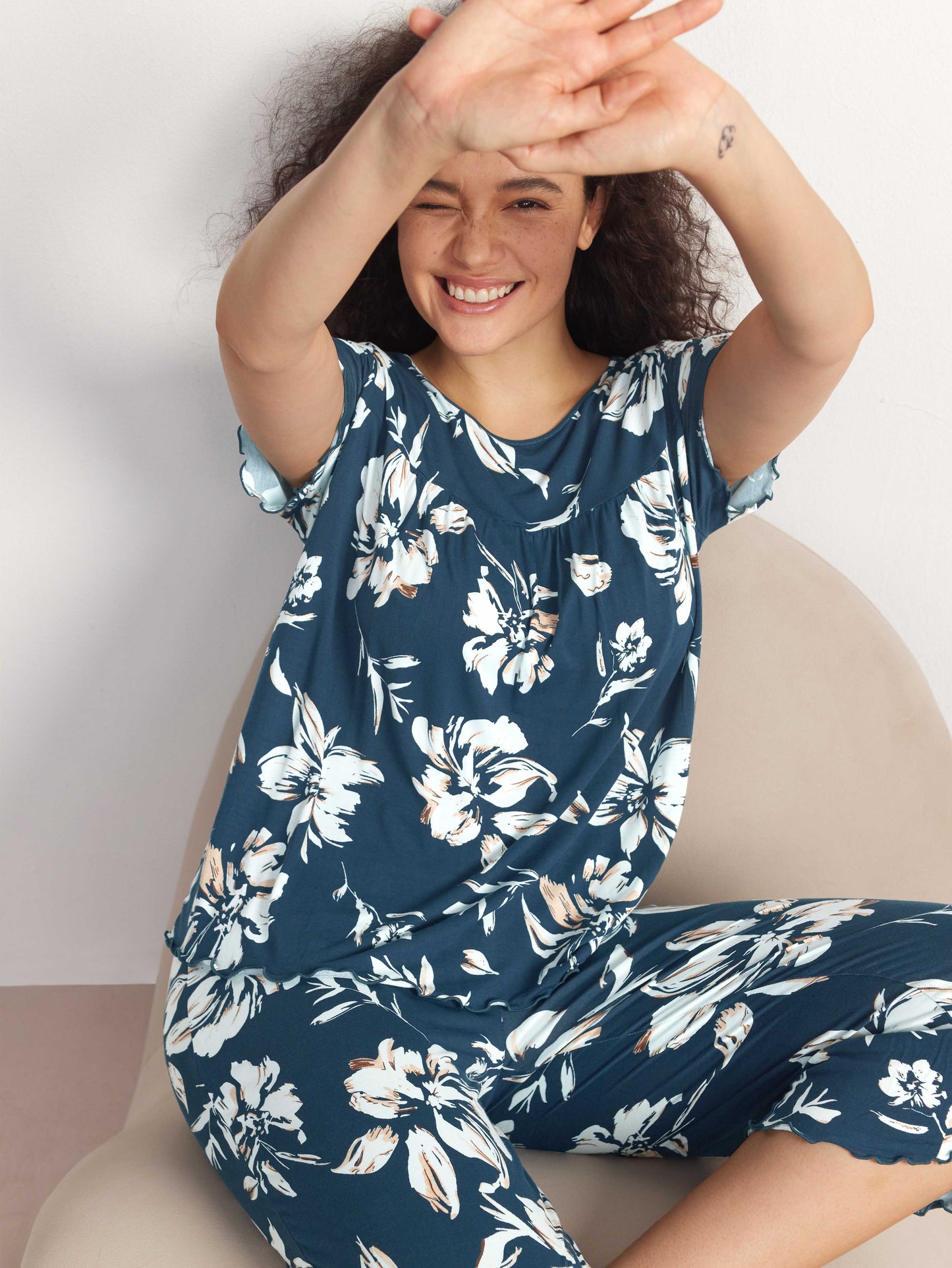
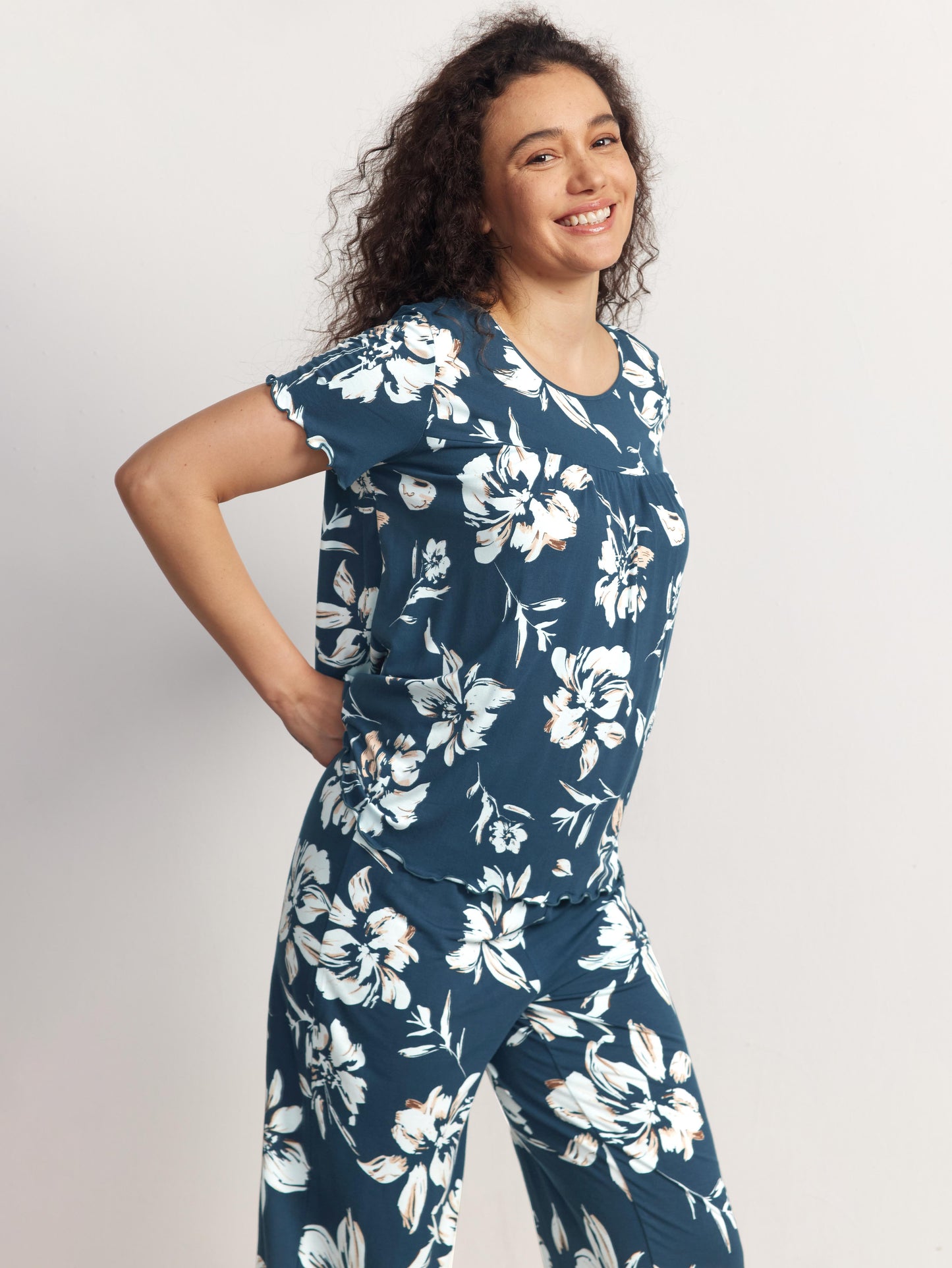
The Premium Collection Has Arrived. More Soft, More Breathable!

Bamboo Pajamas for Night Sweats: Do They Really Work?
Night sweats are more than “just feeling a bit warm”. For many people – especially women going through perimenopause or menopause, people with thyroid issues, or anyone on certain medications – waking up drenched several times a night becomes a serious quality-of-life problem. It affects sleep continuity, mood the next day, even confidence in social and work life.
This is why so many searches now start with a question like: “Can bamboo pajamas actually help with night sweats?” Instead of hype, this article looks at what the fabric can realistically do, what the science says, and how to choose the right bamboo sleepwear.
1. Why night sweats feel so unbearable
Medically, “night sweats” simply refer to episodes of excessive sweating during sleep that aren’t explained by a very hot room or heavy duvet. Triggers can include:
● Hormonal fluctuations (especially around menopause)
● Certain medications
● Overactive thyroid or infections
● Naturally being a “hot sleeper”
Whatever the cause, the experience is similar: you fall asleep comfortably, then wake up hot, sticky, and often chilled once sweat cools on the skin. The key comfort problem is not just heat, but trapped moisture against the body for hours.
That’s where fabric choice – especially moisture-management and breathability – makes a big difference.
2. Moisture-Wicking & Breathable: What bamboo fabric actually does
Bamboo sleepwear on the market is almost always made from viscose (rayon) derived from bamboo rather than raw bamboo fiber. The important question is: how does this fabric behave on your skin?
Textile labs consistently show that bamboo viscose:
● Absorbs more moisture than cotton – roughly 11–14% of its dry weight versus around 8–9% for cotton, and it transports sweat across the fabric surface about 3× faster.
● Shows 20–30% higher air permeability than comparable cotton fabrics, meaning air and water vapor move through the fabric more easily.
● Can absorb several times its weight in moisture and then release it into the air faster, reducing the “cold, clammy” feeling that comes from a wet cotton T-shirt clinging to your back.
In practical terms, this combination of Moisture-Wicking & Breathable performance means bamboo pajamas are better at pulling sweat off your skin, spreading it through the fabric, and letting it evaporate. That’s exactly what people with night sweats need: not zero sweat (which fabric can’t give), but less time soaked in it.
3. “Hollow Porous Structure”: Why bamboo feels like a night-sweat solution
At fiber level, bamboo viscose has a hollow, micro-porous structure. Think of it as a cluster of tiny capillaries running along each filament. These micro-gaps increase surface area and create channels that:
● Draw moisture away from the skin (wicking)
● Spread it across more surface (so it evaporates faster)
● Allow more airflow through the fabric
This is why many hot sleepers describe bamboo pajamas as feeling “cool to the touch” when first put on – the fabric moves heat and moisture away from the skin more efficiently, so the sleep micro-climate around your body stabilises more quickly.
When GYS designs bamboo sleepwear, this principle is front and centre: using light, drapey bamboo jersey that takes advantage of that hollow porous structure rather than heavy, dense knits that trap heat.
4. A Second-Skin Sensation: Softer with every wash
Comfort during night sweats isn’t only about temperature; it is also about how the fabric feels when you are already irritated, anxious, or half-awake.
Many bamboo pajamas are described as offering a “second-skin sensation” – ultra-smooth, slightly cool, and fluid against the body. Lab tests of bamboo viscose fabrics show very low surface roughness (around 0.4 µm), close to silk, which explains this “barely-there” feel.
Unlike some cotton jerseys that become harsher after repeated washing, good-quality bamboo knit often feels softer with every wash when cared for correctly. For someone who already wakes up uncomfortable, that silky-soft, non-itchy contact makes getting back to sleep much easier.
GYS leans into this by using silky-soft, hypoallergenic bamboo fabrics and relaxed, tag-minimised designs – so even sensitive or over-heated skin is less likely to be irritated when you toss and turn.
5. How bamboo compares with cotton, modal, and silk for night sweats
Most people deciding whether to invest in bamboo pajamas are choosing between four main options:
1. Cotton – natural and breathable, but holds onto moisture and dries slowly. Heavy cotton knits can feel cold and clammy once they are wet.
2. Modal / other rayons – good drape and softness, but performance varies by quality and finishing; some blends are less breathable than bamboo.
3. Silk – luxuriously cool to the touch, but often too delicate for frequent, sweaty washing, and can feel sticky in very humid conditions.
4. Bamboo viscose – combines a silky surface feel with high moisture-absorption and fast drying, and is frequently recommended in sleepwear guides for hot sleepers and people with night sweats.
No fabric is magic, but if your main problem is heat + sweat + stickiness, bamboo pajamas usually outperform basic cotton or heavy polyester in how dry and comfortable you feel through the night.
6. What bamboo pajamas can – and can’t – do for menopause night sweats
It is important to be realistic:
● Bamboo sleepwear cannot treat the underlying medical cause of night sweats (such as hormonal changes, thyroid disease, or medication side-effects). For that, you need medical advice.
● What bamboo can do is improve the sleep environment – reducing wetness, cling, odor, and the chill that comes after sweating.
Consumer tests on bamboo bedding show that a majority of hot sleepers report fewer awakenings and less intense overheating when switching from conventional cotton to bamboo viscose sheets. The same material logic applies to pajamas: if your skin stays drier and the fabric doesn’t trap as much heat, you are less likely to wake up feeling miserable.
Think of bamboo pajamas (including the GYS bamboo collection) as a non-pharmaceutical tool in your night-sweat toolkit – to be combined with room temperature control, breathable bedding, hydration, and any medical treatment your doctor recommends.
7. How to choose the right bamboo pajamas for night sweats
When you are comparing different bamboo sleepwear options, look beyond the marketing slogans and focus on details that affect real comfort:
1. Fabric composition & weight
● Look for a high proportion of bamboo viscose (or “rayon from bamboo”) in a light to mid-weight knit.
● Very thick, heavy knits may feel cozy initially but can trap too much heat for true hot sleepers.
In the GYS bamboo pajama line, the focus is on Moisture-Wicking & Breathable knits that are light enough for hot nights while still offering coverage and modesty.
2. Fit and drape
● A High Stretch & Fluid Drape helps fabric skim over the skin instead of clinging to damp patches.
● Avoid overly tight bands at the underbust, waist, or thighs, which can trap heat and restrict airflow.
Many GYS sets use elasticated but non-digging waistbands and relaxed, wide-leg silhouettes so that air can circulate while you sleep.
3. Construction details
● Minimal inner labels, soft seams, and no scratchy lace where you sweat the most (back, underbust, waistband).
● If you are very sensitive, check product photos or descriptions for “tagless” or “heat-transfer label” construction.
4. Safety and skin-friendliness
● For skin that is already irritated by hormones or heat, choose Silky-Soft & Hypoallergenic fabrics and, where possible, products tested to standards like OEKO-TEX® Standard 100, which helps ensure the fabric is free from many harmful substances.
8. So – are bamboo pajamas “worth it” for night sweats?
If you struggle with night sweats, the goal is simple: fewer awakenings, less discomfort, and sheets that stay fresher for longer. From a materials perspective, bamboo viscose offers a combination of:
● Higher moisture absorption
● Faster wicking and drying
● Better breathability
● Silk-like softness on sensitive, overheated skin
This doesn’t replace medical care, but it does make your nights more manageable. High-quality bamboo sets – like those in the GYS bamboo pajama collection – are especially compelling if you:
● Wake up sweaty several times per week
● Share a bed and don’t want to change sheets constantly
● Have sensitive or easily irritated skin
In that sense, bamboo pajamas are not a miracle cure, but they are a smart, evidence-backed comfort upgrade for anyone living with night sweats.