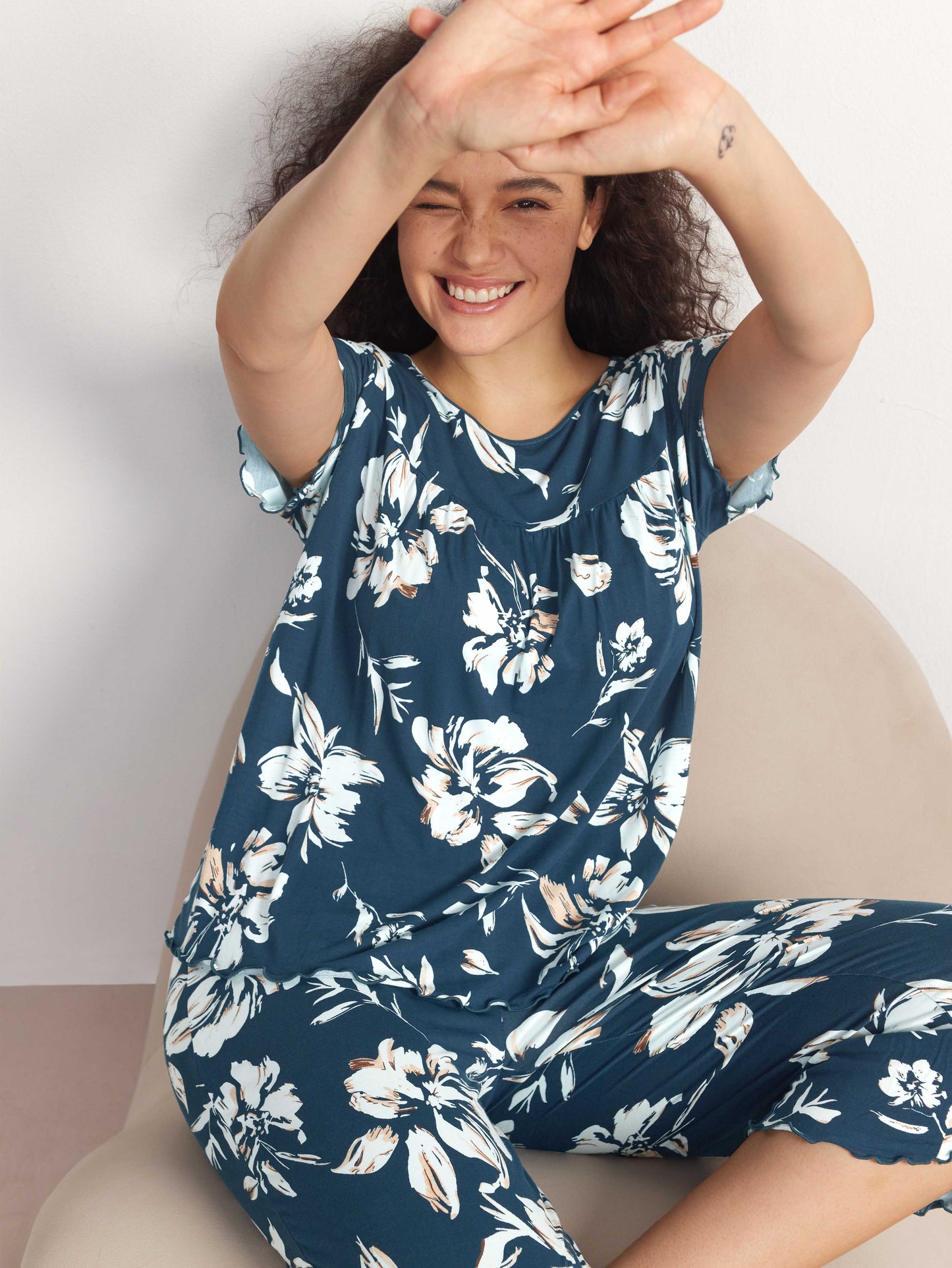
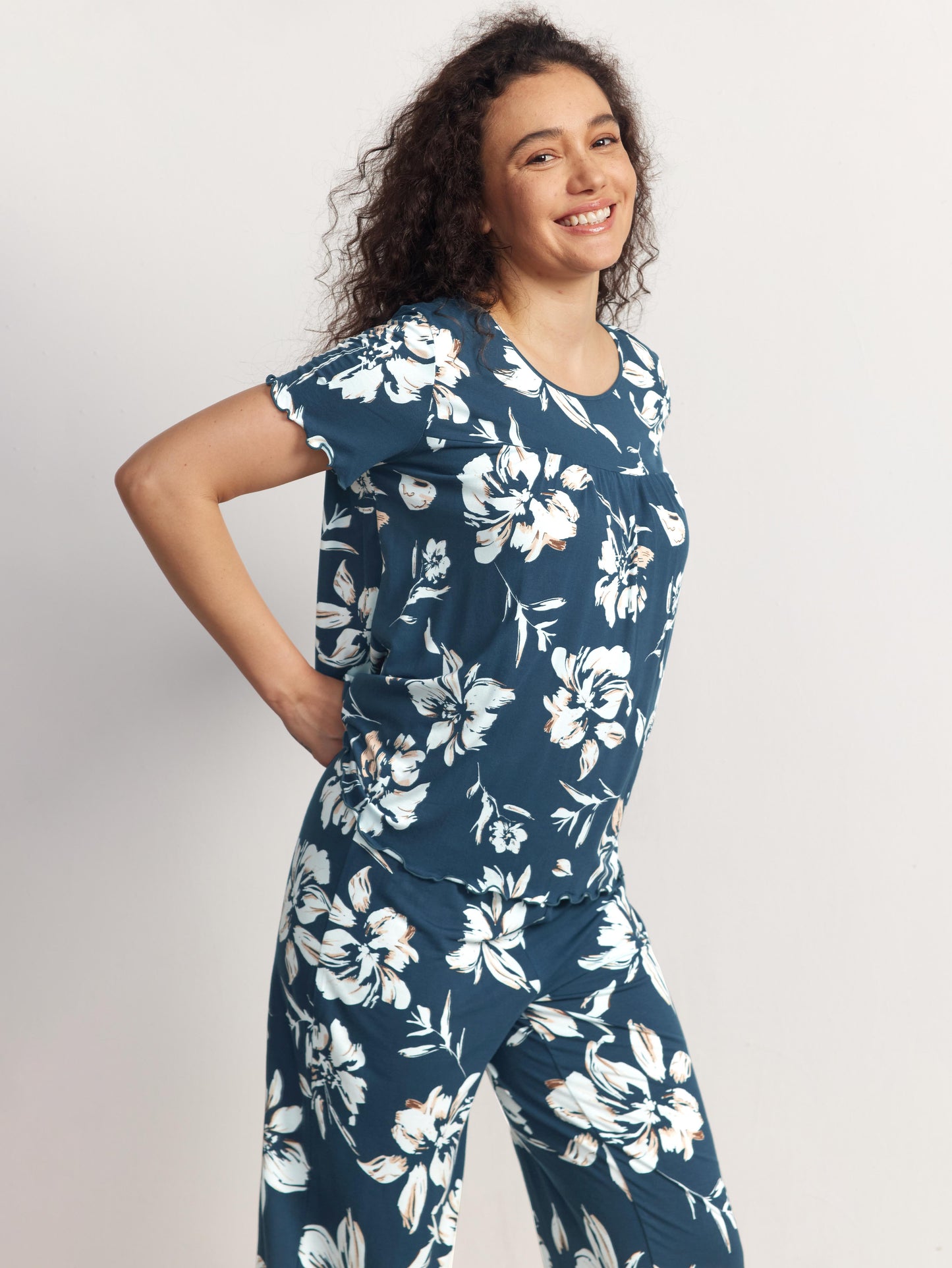
The Premium Collection Has Arrived. More Soft, More Breathable!

Are Bamboo Pajamas Really Eco-Friendly? A Guide to Sustainable Sleepwear
Search for eco-friendly bamboo pajamas, and you will be greeted by images of green forests, fresh dew, and words like “sustainable”, “organic”, and “natural”. But if you dig into reviews and discussion threads, you will also see a different narrative: concerns about harsh chemicals, doubts about “rayon from bamboo”, and frustration with greenwashing.
So how do you know whether a pair of bamboo pajamas for women is genuinely better for the planet — or just dressed in a greener marketing language?
This article offers a practical checklist you can use while shopping, along with a look at how GYS bamboo sleepwear approaches sustainability in a more honest, long-term way.
1. The real sustainability promise of bamboo (the plant)
As a plant, bamboo has impressive credentials:
-
It grows extremely fast and can be harvested without replanting, because the root system remains alive.
-
It typically requires far less water and fewer agricultural inputs than thirsty crops like conventional cotton.
-
It helps prevent soil erosion and can absorb large amounts of CO₂ while producing more oxygen per hectare than most trees.
From a raw material perspective, bamboo is a strong candidate for more sustainable textiles. The complexity begins after the stalks are harvested.
2. The manufacturing reality: viscose vs. lyocell vs. linen
Most bamboo sleepwear is not woven from raw bamboo fibers but made through chemical processing into viscose (rayon) or lyocell.
-
Bamboo viscose (rayon from bamboo)
Traditionally, it uses chemicals such as sodium hydroxide and carbon disulfide. In poorly controlled “open-loop” factories, these can lead to water pollution and serious occupational health risks. -
Bamboo lyocell
Uses a non-toxic solvent (NMMO) in a closed-loop system. Up to 99% of the solvent and water can be recovered and reused, dramatically cutting emissions and waste. -
Bamboo linen
Mechanically processed, with a lower chemical footprint but a more textured, linen-like feel. It is less common in soft women’s pajamas because it is crisper and less drapey.
This means that two pajama sets labeled “bamboo” can have very different environmental footprints depending on how the fabric was produced.
3. Five questions to test whether bamboo sleepwear is truly sustainable
Question 1: Is the fabric clearly named?
A genuinely transparent brand tells you if you are buying:
-
“Viscose from bamboo” or “rayon from bamboo”
-
“Bamboo lyocell”
-
“Bamboo linen”
-
Or a blend (for example, bamboo viscose + cotton + elastane)
In several markets, regulators have already asked brands to stop calling viscose simply “bamboo” and to label it correctly as “rayon from bamboo” or “viscose from bamboo” so that consumers are not misled.
If a product page only says “bamboo fabric” without details, yet heavily emphasizes “green” messaging, that is an early red flag.
Question 2: Does the brand explain how its bamboo is processed?
Sustainability is not just about the plant; it is about the system around it:
-
Does the brand mention closed-loop manufacturing, solvent recovery rates, or wastewater treatment?
-
Does it reference specific mills or production standards?
-
Or does it only use vague words like “eco-friendly” and “sustainable” without evidence?
Some modern mills now combine enzyme-assisted pulping with high solvent-recovery rates and low-emission systems, significantly reducing the impact of bamboo viscose.
A brand that has invested in these improvements usually shares at least part of that story.
Question 3: Are there credible certifications?
True sustainability includes chemical safety and human health. Look for:
-
OEKO-TEX® Standard 100 – independently tests for harmful substances in fabrics and dyes.
-
FSC® or similar forestry certifications – help ensure raw materials come from responsibly managed sources.
-
Any additional third-party lab testing or reporting.
These do not guarantee a perfect supply chain, but they provide more reassurance than a green leaf icon on the product image/page.
Question 4: How long will the garment actually last?
A “sustainable” fabric that pills, shrinks, or loses shape after a few months is not truly sustainable. Longevity matters just as much as raw material.
High-quality bamboo pajamas should offer:
-
Good fabric weight and density
-
Smooth surface with low pilling tendency
-
Strong seams and flat, comfortable stitching
-
The ability to stay soft and hold shape wash after wash
This is where GYS bamboo pajamas place a strong emphasis on both fabric selection and construction. Our focus is on durability, not disposability: odor-resistant fabrics that stay fresh, knit structures that resist bagging, and tested wash protocols that keep pieces wearable season after season.
Question 5: Does the design match your real life?
The most sustainable pajamas are the ones you actually wear — repeatedly.
Consider:
-
Can you wear them across multiple seasons (for example, thermo-regulating bamboo fiber pajamas rather than a single-month novelty)?
-
Do they work both as loungewear and sleepwear, letting you step from bedroom to living room or to the front door without changing?
-
Are the colors and silhouettes timeless enough that you will still like them next year?
If a set is soft but impractical, it will spend more time in a drawer than on your body.
4. How GYS thinks about sustainability beyond marketing language
At GYS (gyspajamas.com), our design decisions for bamboo fiber pajamas start from real user pain points we see repeatedly:
-
Rough, itchy, irritating fabrics
-
Stifling heat and night sweats
-
Temperature swings — too hot some nights, too cold on others
-
Pilling, shrinking, and static shocks that make sleepwear look tired too fast
Our bamboo sleepwear strategy addresses these at three levels:
4.1 Fabric & safety
-
Prioritizing breathable bamboo viscose and other high-bamboo compositions for strong moisture-wicking and a naturally cool handfeel
-
Selecting mills and finishes that allow us to offer soft & hypoallergenic fabrics suitable for sensitive skin, including women prone to irritation or dryness
-
Using materials that are tested to be free from harmful substances, so your bamboo pajamas are safe as a “second skin” all night
4.2 Comfort & thermoregulation
-
Designing knit structures and weights that support thermo-regulating comfort — too hot and you cannot sleep, too cold and you keep waking up.
-
Creating styles that work as summer bamboo pajamas, but also layer well in transitional seasons.
-
Combining breathability and stretch, so women’s pajama pants and tops move with you instead of clinging when you change positions
4.3 Longevity & emotional value
-
Reinforced seams, anti-static finishes, and pattern cutting that reduces points of stress
-
Fabrics that stay smooth and drapey instead of turning thin and rough after a few washes
-
Designs that feel elegant enough for at-home hosting or quick errands, increasing the number of times you reach for them
In short, we see sustainable bamboo sleepwear as something you can wear often, comfortably, and for years, not just as a buzzword on a tag.
5. Building a bamboo sleepwear wardrobe that actually makes a difference
If you want to align comfort, skin health, and sustainability, start with these steps:
-
Choose one high-quality core set.
For example, a buttery soft bamboo pajama set from GYS that you can wear in multiple seasons. -
Check the label and the story.
Confirm whether it is bamboo viscose, bamboo lyocell, or a blend; look for certifications and any explanation of the production process. -
Test it against your real nights.
Pay attention: Do you wake up less sweaty? Does your skin feel calmer? Does the fabric stay fresh after several wears and washes? -
Add thoughtfully.
Once you know you love the feel of bamboo, you can add a bamboo nightgown, women’s lounge pants, or a summer pajama set — always with wear frequency and longevity in mind.
By asking the right questions and favoring transparency over buzzwords, you can move past marketing into genuinely better choices — for your body, your sleep, and the planet. And as a bamboo-focused brand, GYS will continue refining our fabrics and processes so that every new collection not only feels softer, but also stands on a stronger sustainability foundation.